
Poker is a card game loved worldwide that combines luck and strategy. Among its variants, “Texas Hold’em” is particularly popular due to its simple rules and deep strategic gameplay.
In this article, we will carefully explain the rules and tactics that poker beginners should understand first.
- What is Poker? Its Appeal and Basic Structure
- Flow of Texas Hold’em
- Poker Hand Rankings (Strongest to Weakest)
- Betting Actions and Strategies
- Key Points Beginners Should Learn First
- Selecting Starting Hands
- The Importance of Position
- Adjusting Bet Sizing
- Bluffing Techniques
- Summary
- Frequently Asked Questions (FAQ)
What is Poker? Its Appeal and Basic Structure
Poker is a game where participants create hands using their own cards and community cards, competing based on the strength of these hands. Victory is achieved by either having the strongest hand or by forcing opponents to fold.
Its greatest appeal lies in the fusion of probability, psychological warfare, and strategy rather than being merely luck-based.
Flow of Texas Hold’em
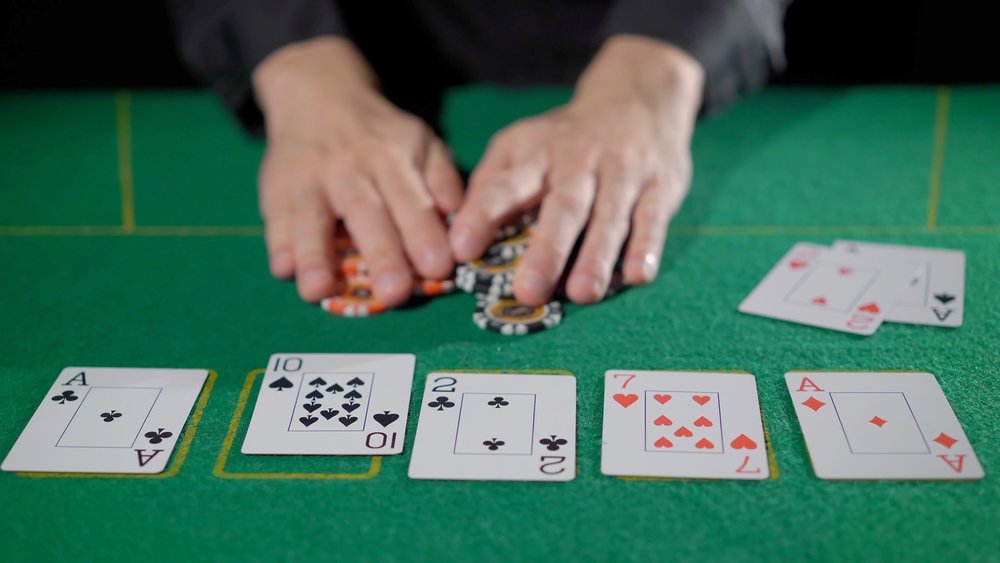
- Dealing Hole Cards: Each player is dealt 2 face-down cards.
- Pre-flop: The first betting round. Players decide their action after looking at their cards.
- Flop: 3 community cards are placed face-up in the center of the table.
- Second Betting: Additional bets are made.
- Turn: A 4th community card is added.
- Third betting: Another opportunity for betting.
- River: The final 5th community card is revealed.
- Final Betting: The last chance betting round.
- Showdown: Remaining players reveal their cards, and the one with the strongest hand wins.
Poker Hand Rankings (Strongest to Weakest)
| Role Name | Description |
|---|---|
| Royal Flush | 10, J, Q, K, A of the same suit. |
| Straight Flush | 5 consecutive cards of the same suit. |
| Four of a Kind (Quads) | 4 cards of the same rank. |
| Full House | 3 cards of one rank and two of another. |
| Flush | 5 cards of the same suit. |
| Straight | 5 consecutive cards of any suit. |
| Three of a Kind (Trips or Set) | 3 cards of the same rank. |
| Two Pair | 2 different pairs. |
| One Pair | 2 cards of the same rank. |
| High Card | No combination; the highest single card wins. |
Betting Actions and Strategies

- Check: Wait and see without betting.
- Bet: Place new chips as a wager.
- Call: Match the bet made by the previous player.
- Raise: Increase the bet amount.
- Fold: Give up and pass on this game.
Regardless of the strength of your hand, your choice of action can still lead to victory. Your ability to time your moves and read your opponent’s psychology will be tested.
Key Points Beginners Should Learn First
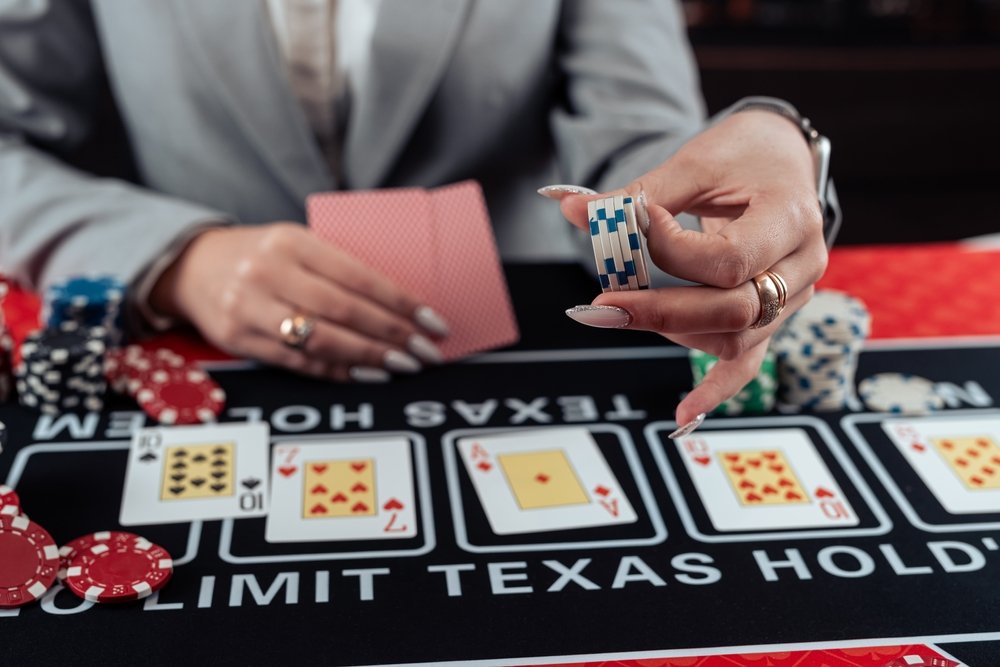
- First, memorize the hands: It’s important to internalize which hands are stronger.
- Be aware of your position: Players who act later have an advantage in decision-making.
- Study bluffing: Even with a weak hand, you win if you make your opponent fold. Acting skills in your expressions and behavior can be key to victory.
Selecting Starting Hands
In poker, the selection of your first two cards (hole cards) is crucial. Playing with strong starting hands can increase your winning percentage.
| Hand combinations | Evaluation |
|---|---|
| AA, KK, QQ, JJ | Very strong |
| AK, AQ, AJ(same suit) | Strong |
| TT, 99, 88 | Moderate |
| Low pairs or cards of different suits | Weak |
The Importance of Position
In poker, the order of play (position) significantly impacts strategy. Players who act later have an advantage as they can make decisions after seeing other players’ moves.
- Early position: Acting first requires cautious play due to limited information.
- Middle Position: From this intermediate position, you can act with some gathered information.
- Late Position: Acting last allows you to make decisions with the most information available.
Adjusting Bet Sizing
The amount you bet is an important element for pressuring opponents or controlling the pot. General guidelines for bet sizing are as follows:
| Bet Sizes | Purpose |
|---|---|
| 1/3 of pot | Gathering information or building small pots |
| 1/2 of pot | Balancing value bets and bluffs |
| 3/4 or more of pot | Applying pressure with strong hands or bluffingRetryA |
Bluffing Techniques
Bluffing is a tactic where you make your opponent fold by pretending to have a strong hand when you actually don’t. To make it successful, keep these points in mind:
- Consistent storyline: Ensure that your bets and actions flow in a way that convinces others you have a strong hand.
- Opponent’s Personality and Play Style: Bluffs are more likely to succeed against cautious players.
- Board situation: Your bluff becomes more convincing on boards where strong hands could easily be completed.
Summary
Poker is not just gambling but a competition that tests intelligence and psychological warfare. Even beginners can improve while having fun by learning the basics thoroughly and gradually gaining practical experience.
In 2025, why not discover the appeal of poker for yourself?
Frequently Asked Questions (FAQ)
Q1: Where should beginners start?
A1: First memorize the hands, then develop a feel for real gameplay through free online games.
Q2: What equipment is needed for poker?
A2: You can start with just playing cards and chips. It’s possible to play at home with friends.
Q3: What’s the trick to increasing win rate?
A3: Being aware of position and learning the timing of bets is important.
Q4: Is bluffing essential?
A4: Not essential, but if used effectively, it can increase your win rate.
Q5: Which is better, online or offline?
A5: For beginners, it’s recommended to gain experience casually online first. Once you get used to it, real-life matches can provide good stimulation.







コメント