
To become successful at poker, you need strategic thinking and continuous learning rather than relying on luck alone. This article provides specific steps for players from beginner to intermediate levels to improve their poker skills.
Set Clear Goals
Poker is not just entertainment but an intellectual sport that requires systematic skill development. Therefore, it’s crucial to first clarify “how far you want to go.” Without defined goals, it becomes unclear what you should learn and what kind of practice is necessary.
For example, goals might include:
- Earning a stable monthly profit of $500 from online cash games
- Aiming to place in the money at live tournaments once per month
- Achieving a top 5% rating on a specific platform
- Understanding and practically applying GTO (Game Theory Optimal) strategy
The key point is that all these goals are specific and measurable. Vague aspirations like “I want to get better” make it difficult to establish a roadmap and maintain motivation. Setting goals according to SMART principles (Specific, Measurable, Achievable, Relevant, Time-bound) makes it easier to track your progress.
You don’t need to limit yourself to just one goal. Combining short-term goals (e.g., reaching the final eight in next month’s tournament) with long-term goals (e.g., earning $1,000 monthly from online poker within a year) makes it easier to find meaning in daily practice.
Poker is a game that requires self-management. Having clear goals naturally clarifies the actions needed for improvement. In the next step, we’ll look at the basic strategies needed to achieve these goals.
Learn Basic Strategy
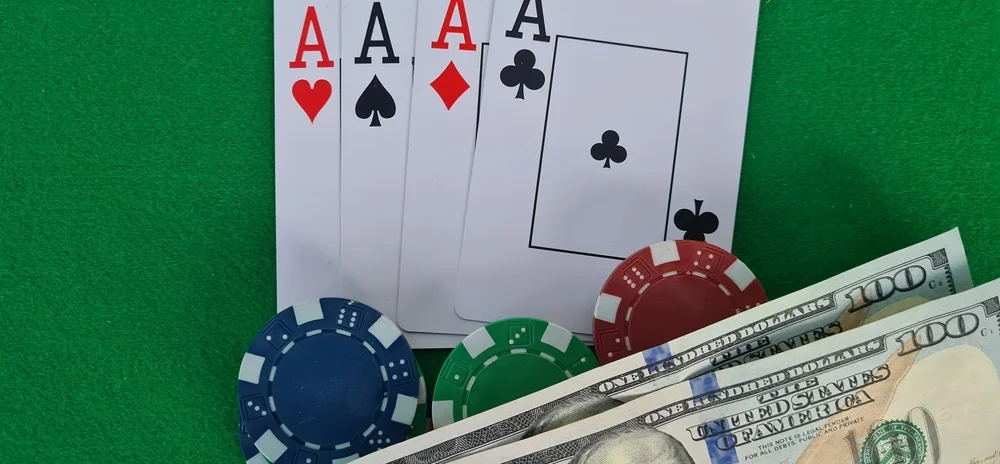
Poker is a game where strategy makes the difference. While there’s an element of luck, strategy determines wins and losses in the long run. Here, we’ll specifically explain the basic strategies that even beginners should master.
- The Importance of Position: Your position at the table is one of the most critical elements in poker. Generally, the later you act in the betting order, the more information you have, giving you an advantage. For example, in late positions like the Button (BTN) or Cut-off (CO), you can make decisions after seeing opponents’ actions, making it easier to execute bluffs and value bets. Conversely, in early positions like Under the Gun (UTG), you face higher risk unless you have stronger hands.
- Understanding Hand Ranges: Starting hands you should play vary by position. For instance, from UTG, limit yourself to strong hands like AA-99, AKs, AQs, while from the BTN you can play a wider range. Use hand range charts to build ranges that suit your playing style. The ability to predict opponents’ ranges is also important. Observe when opponents bet and develop the skill to narrow down their possible holdings.
- Adjusting Bet Sizing: In poker, freely adjusting bet sizes is key to controlling opponents. If you vary bet sizes too much between value bets (extracting chips with strong hands) and bluffs (forcing opponents to fold with weak hands), you become predictable. Generally, continuation bets on the flop should be around 1/2 to 2/3 of the pot, but this should be flexibly adjusted based on opponent types and board texture.
- Understanding Pot Odds and Expected Value (EV): When deciding whether to call or fold against a bet, pot odds and expected value (EV) are helpful tools. By calculating what percentage of chips you’re paying relative to the pot and comparing it with your hand’s winning probability, you can make mathematically correct plays. This helps avoid emotional decisions and enables consistent play.
- Reading Opponent Tendencies (Player Types): It’s important to determine whether opponents are tight (cautious) or loose (aggressive), passive (reactive) or aggressive (attacking), and adjust your strategy accordingly. For example, trap plays work well against loose-aggressive opponents, while bluffs are more effective against tight-passive opponents. Using statistical tools (HUDs) helps quantify and understand opponents’ playing tendencies.
Understanding and implementing these basic strategies is the first step toward stabilizing your win rate in poker and generating long-term profits. Next, let’s look at how to actually gain experience.
Build Experience Through Practice

Simply learning poker theory and strategy won’t help you apply them in actual games. To transform knowledge into experience, it’s essential to play as many hands as possible and “practice.” Here, we’ll explain effective practice methods and important points to consider.
Utilize Online Poker
Online poker is the most convenient practice venue. You can play regardless of time or location, with various games available from low to high stakes, making it accessible even for beginners. Moreover, you can play hundreds of hands per hour, dramatically accelerating the accumulation of experience.
Recommended platforms include:
- KKPoker: Japanese language support, wide range of levels, beginner-friendly
- PokerStars: World’s largest platform, abundant tournament selection
- 888poker: Beginner bonuses available, user-friendly interface
Develop Psychological Warfare Skills Through Live Poker
Once you’re comfortable with online poker, definitely try live poker as well. You’ll gain “face-to-face information” that’s unavailable online. The appeal of live poker lies in testing your ability to read opponents’ physical behaviors such as facial expressions, speech patterns, and betting habits.
Additionally, regularly visiting casinos or poker rooms allows you to face the same opponents multiple times, enabling deeper psychological battles and strategic applications.
Record and Analyze Hand History
To apply experience gained from practice to future games, reflection is essential. Online platforms have features that automatically save hand history, and analysis tools like PokerTracker and Hand2Note can visualize misplays and successful examples as data.
For instance, by tracking detailed data such as “success rate of check-raises on the flop” or “bluff frequency and profitability on the river,” you can objectively assess your tendencies.
Create a Practice Plan Based on Your Goals
Random practice accumulation becomes inefficient. Establish specific plans such as “play 300 hands per week” or “participate in one tournament daily.”
Furthermore, by consciously playing situations you struggle with (e.g., river decisions, approaches against tight opponents), you can accelerate your growth rate.
Practice is the core of poker improvement. Accumulating volume builds experience and confidence. Next, let’s look at how to review and improve your play based on this experience.
Review and Analyze Your Play

Review and analyze your play afterward. Using hand history and analysis tools (e.g., PokerSnowie) will clarify areas for improvement.
Mental Management
Poker is psychological warfare. To avoid being swayed by emotions and maintain composure, you need strategies to avoid the emotional state called “tilt.” Take breaks when necessary.
Hand Range Quick Reference (6-Handed Table)
| Position | Recommended Hand Range Example |
|---|---|
| UTG | AA-99, AKs-AQs, AKo-AQo |
| HJ | AA-88, AKs-ATs, AKo-AJo |
| CO | AA-77, AKs-A9s, AKo-ATo |
| BTN | AA-66, AKs-A2s, AKo-A9o |
| SB | AA-77, AKs-A5s, AKo-AJo |
| BB | AA-66, AKs-A4s, AKo-AJo |
*The above is just an example. Adjust flexibly based on opponents and situations.
Summary

To become strong at poker, you need to develop four elements in a balanced way: knowledge, experience, analysis, and mental game. Using the methods introduced in this article as reference, start practicing step by step from today.
Frequently Asked Questions (FAQ)
Q1: Which is better for improvement – online or live poker?
A1: Online offers more hands and easier experience accumulation. Live poker teaches psychological warfare.
Q2: Can you improve using free apps?
A2: Useful for initial learning, but paid/real money environments are more effective for improvement.
Q3: What books do you recommend?
A3: For beginners, “Phil Gordon’s Little Green Book” is easy to understand.
📚 More Articles to Read Next
- The Latest 2025 Poker Course for Beginners
- KKPoker Complete Guide 2026: Registration, Invitation Codes, Deposits, Bonuses
- A Serious Approach to Poker: Strategy, Mindset, Rules, and Tournaments
- Boost Win Rates in Spare Moments: Enjoy Poker Improve
- Top 10 Recommended Land-Based Casinos [2025 Latest] Comprehensive Comparison of